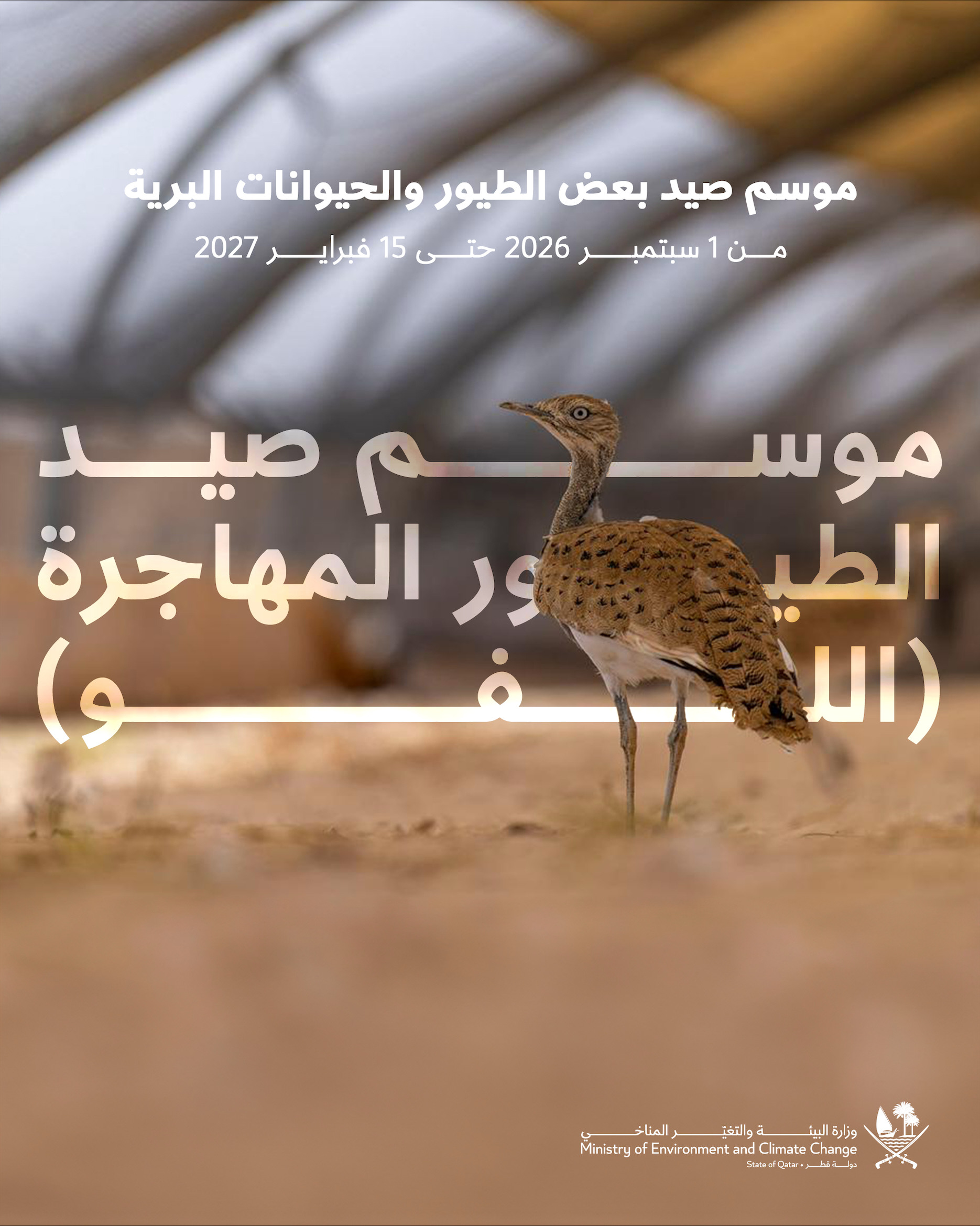
The Ministry of Environment and Climate Change (MECC) has announced that the migratory bird hunting season will commence on 1 September 2026 and continue until 15 February 2027, in accordance with Ministerial Resolution No. (7) of 2026, which specifies the hunting season, the bird species permitted for hunting, and the approved methods and equipment that may be used.
The Ministry emphasized the importance of hunters complying with the regulations and conditions governing the hunting season and adhering strictly to the species, methods, and equipment specified in the Ministerial Resolution. Such compliance contributes to protecting wildlife, conserving biodiversity, and promoting the sustainable management of natural resources and ecological balance in the State.
The Resolution identifies the bird species permitted to be hunted during the season as follows: Houbara Bustard, Eurasian Curlew, Teal (Duck), Blue Rock Thrush, Song Thrush, Common Whistling Thrush (locally known as Umm Al-Sa’ou), Collared Lark, Isabelline Wheatear, Desert Wheatear, and Northern Wheatear
The Resolution also prohibits the hunting of any other species of wild mammals, birds, or reptiles not included in the list of permitted species, in accordance with the national legislation governing environmental protection and wildlife conservation.
The Ministry further stressed that Houbara Bustard hunting is permitted exclusively by using falcons and reiterated the prohibition of unauthorized hunting methods and equipment, particularly electronic calling devices that imitate bird calls, due to their adverse effects on wildlife and ecological balance.
The Ministry of Environment and Climate Change called upon all hunters to comply with the provisions of the Resolution and the regulations governing the hunting season, and to practice hunting responsibly in a manner that safeguards wildlife and their natural habitats. The Ministry affirmed that compliance with environmental legislation is a shared responsibility that contributes to conserving biodiversity and ensuring its sustainability for future generations.