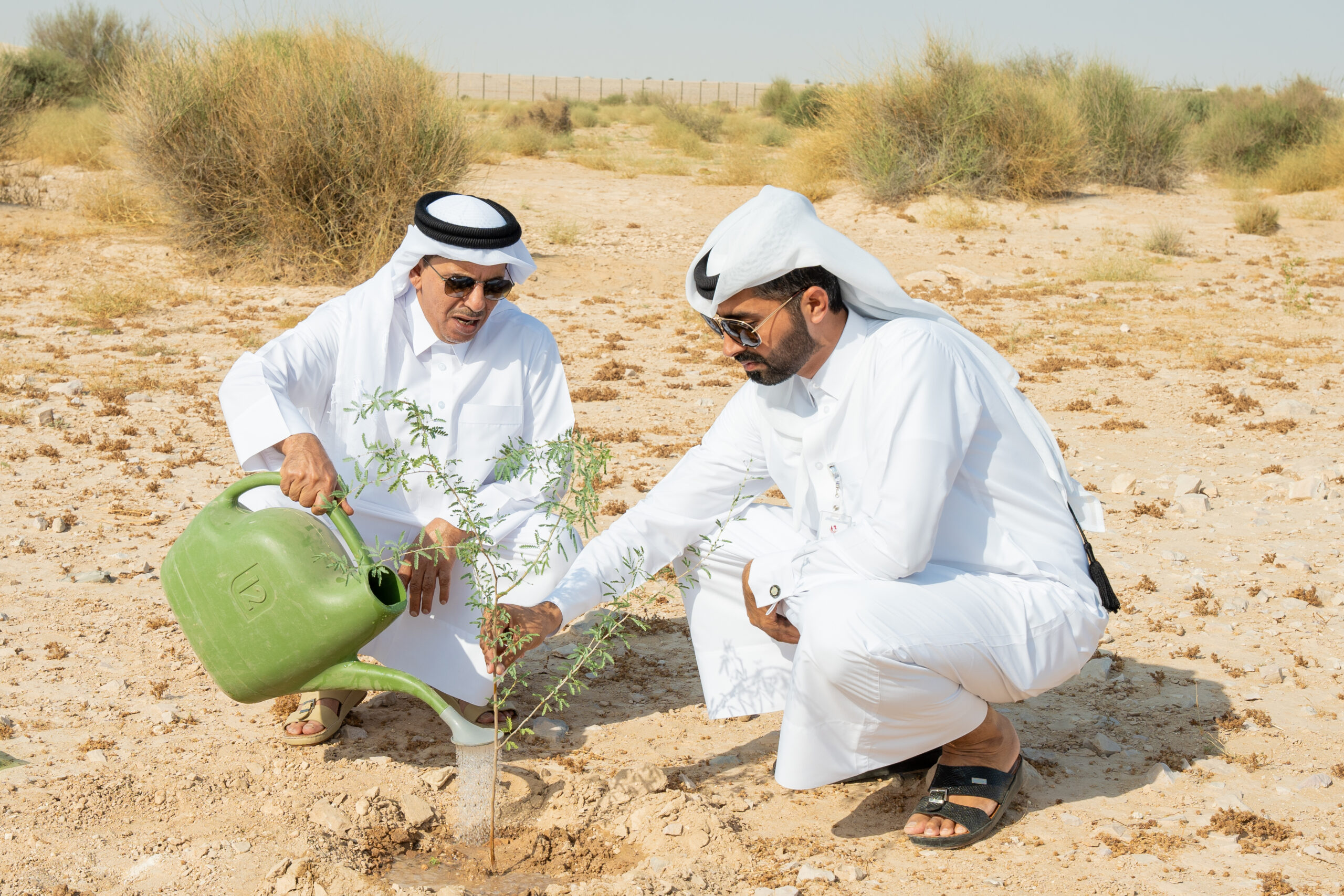
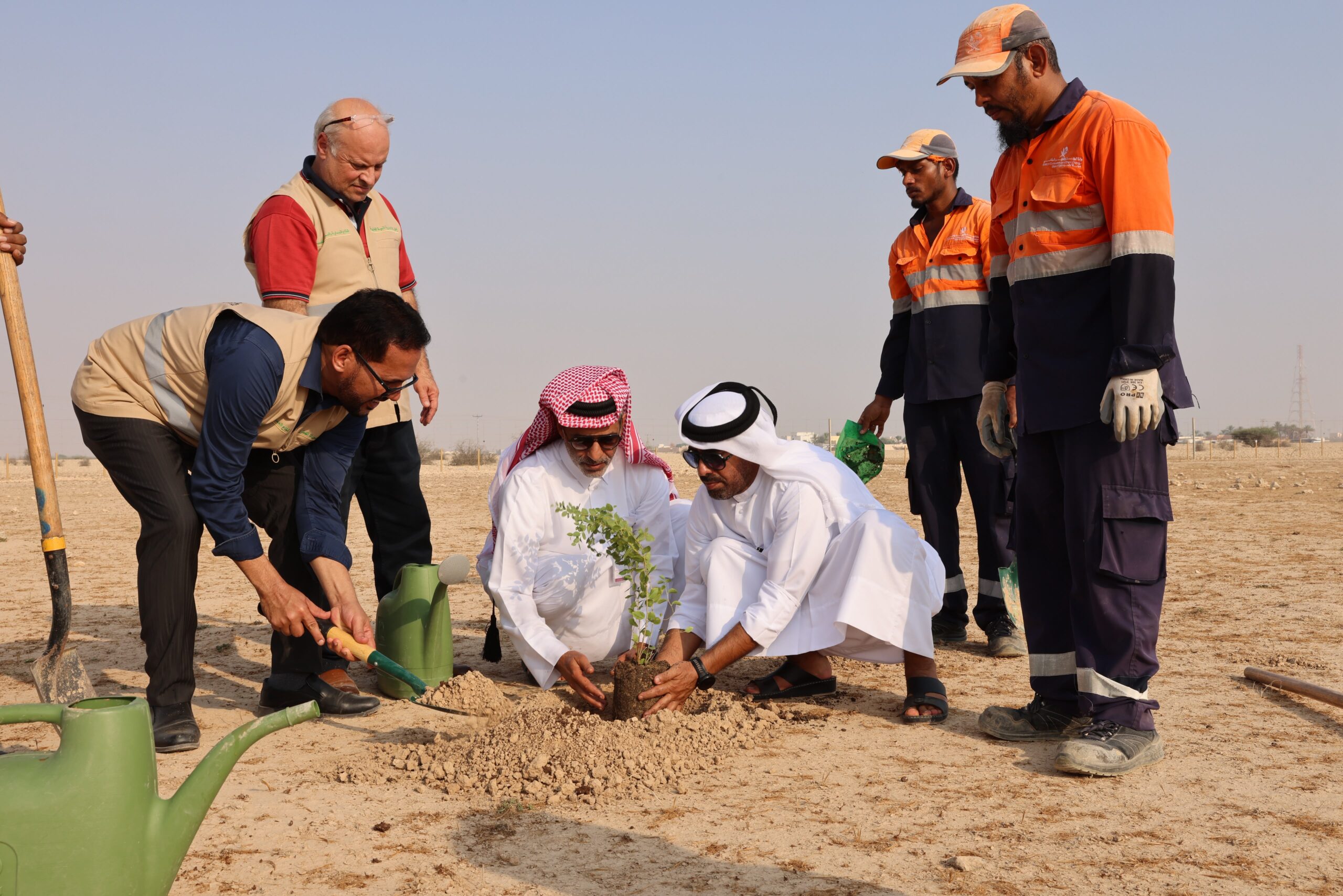
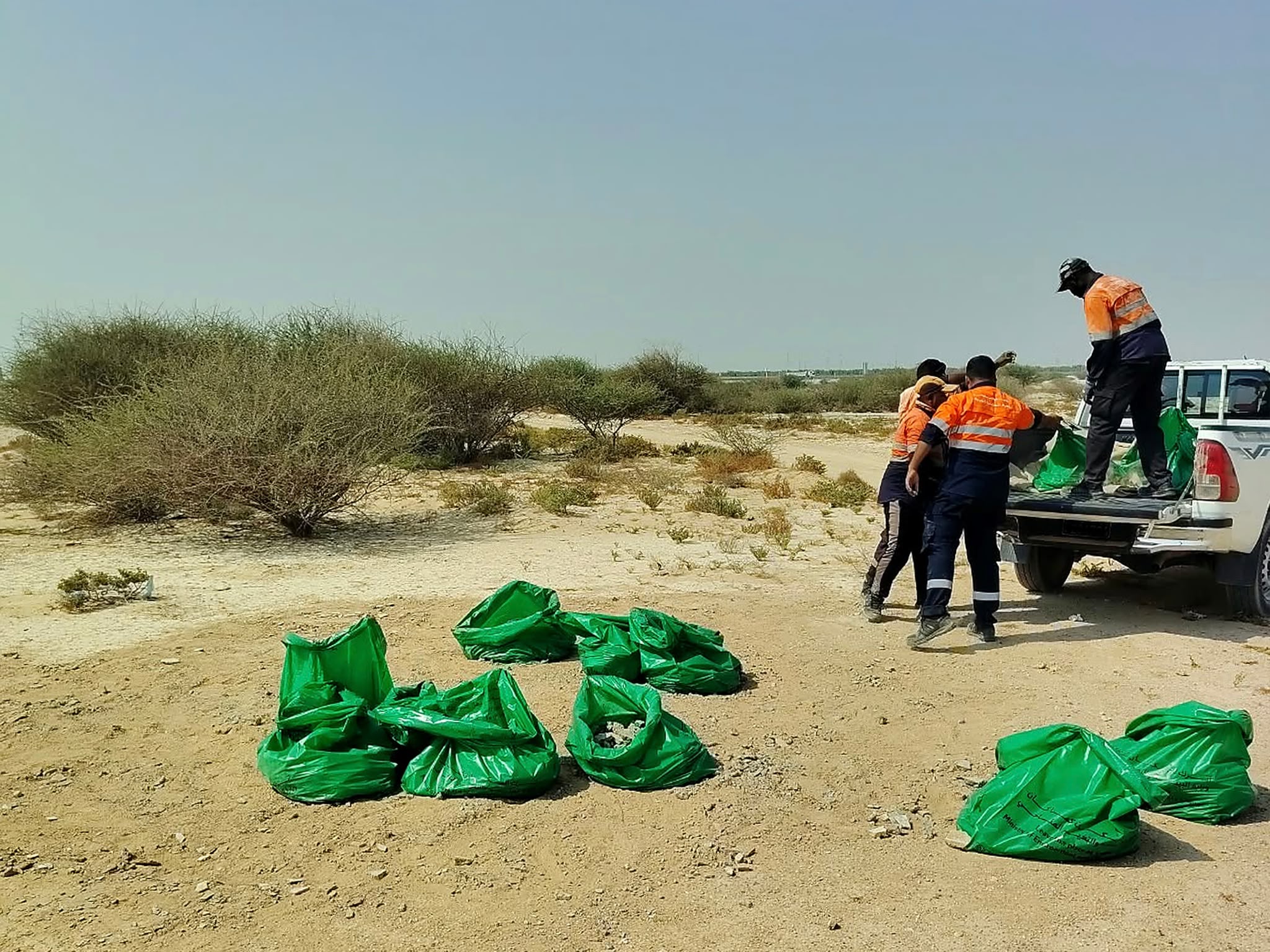
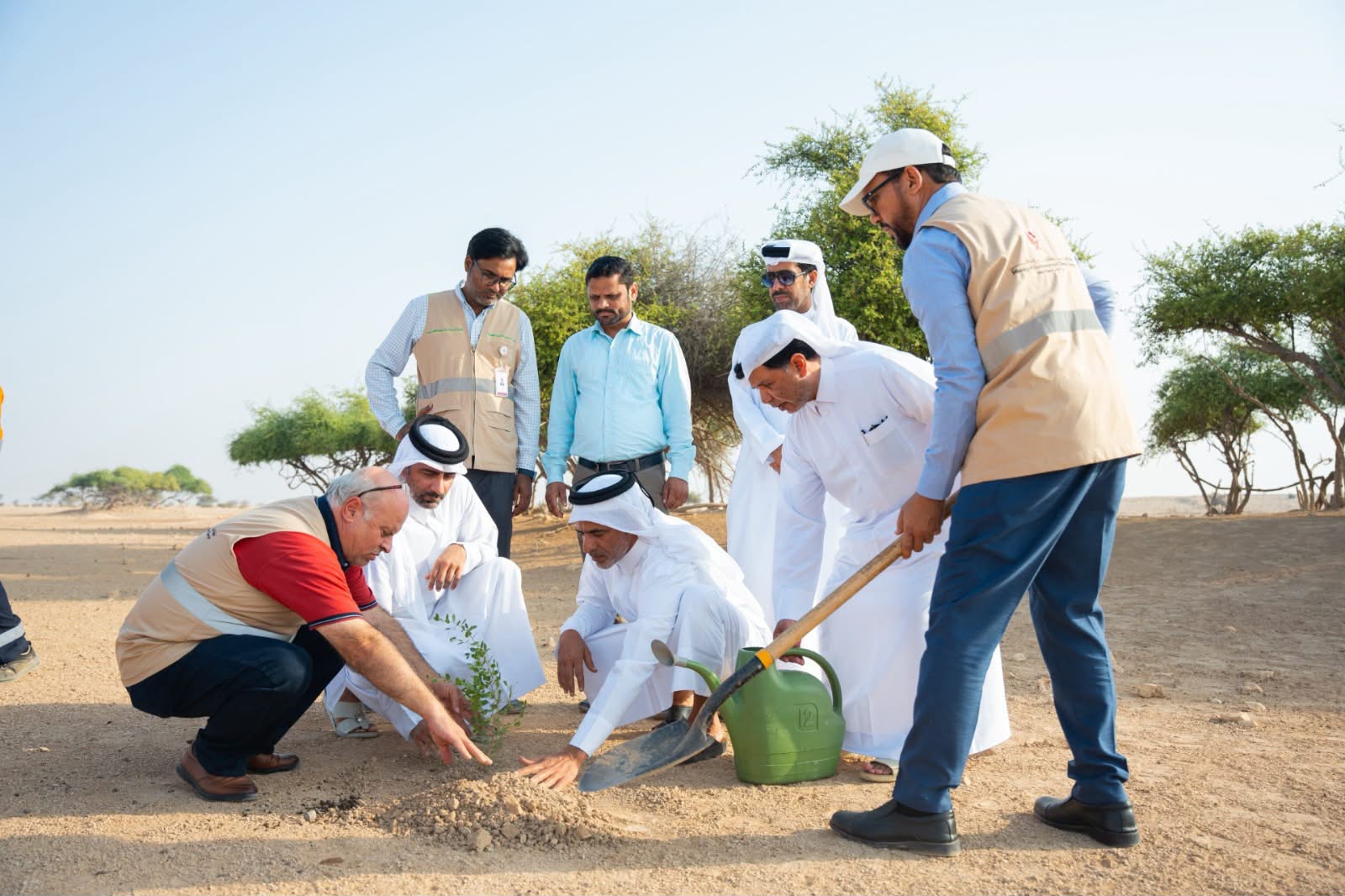
The Ministry of Environment and Climate Change, represented by the Wildlife Development Department, organized a rehabilitation activity for “Houtan” Rawdah in the northern region, as part of its ongoing efforts to rehabilitate Qatar’s rawdahs, enhance natural vegetation cover, and conserve biodiversity and terrestrial ecosystems in the State of Qatar.
The rehabilitation works, carried out on Thursday, 17 September 2026, included planting 300 seedlings of native wild plants, in addition to sowing approximately 5,000 seeds of wild species suitable for the site’s natural conditions. These efforts contribute to increasing vegetation density, supporting the natural regeneration of wild plants, and improving the environmental condition of the rawdah. The activity was attended and participated in by a number of officials and specialists from the Ministry of Environment and Climate Change.
In this context, Mr. Adel Mohammed Al-Yafei, Head of the Wild Plant Life Section at the Wildlife Development Department, affirmed that the Ministry continues to implement its plans and initiatives aimed at rehabilitating Qatar’s rawdahs and enhancing their natural vegetation cover. He noted that planting and seed-sowing activities form part of the national efforts to conserve terrestrial ecosystems and protect biodiversity.
Al-Yafei explained that planting native wild plants and sowing their seeds in rawdahs contribute to supporting the natural regeneration of vegetation cover, improving the quality of natural habitats, and enhancing the stability of ecosystems. He pointed out that selecting plant species suitable for the characteristics of each site is an important factor in the success of rehabilitation programs and in ensuring the sustainability of their outcomes.
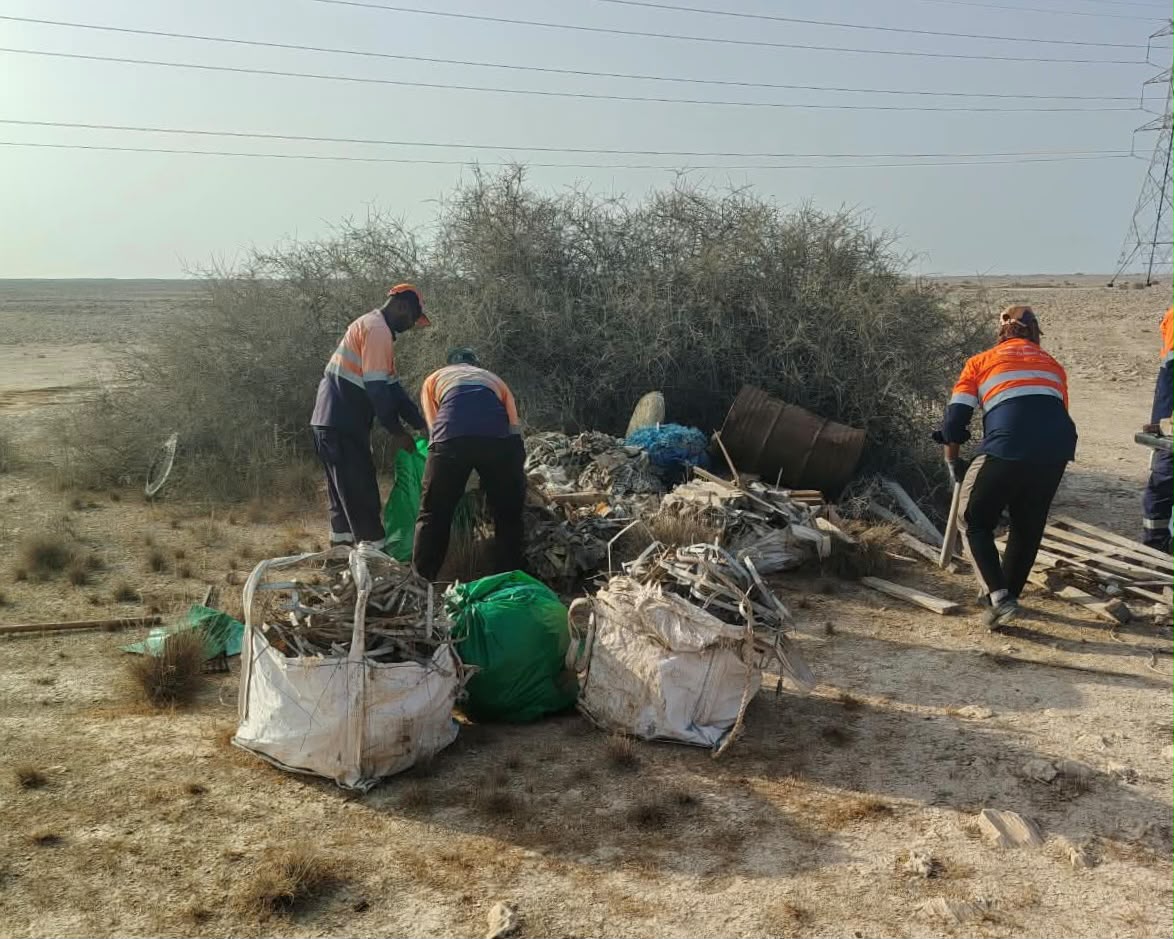
He added that the Ministry attaches particular importance to Qatar’s rawdahs, as they are important components of the country’s terrestrial environment and play a vital role in supporting wildlife and maintaining ecological balance. He affirmed the continuation of field programs and initiatives aimed at rehabilitating these sites, protecting their natural components, and reducing factors that affect their vegetation cover.
The rehabilitation of “Houtan” Rawdah forms part of a series of field programs and projects implemented by the Ministry of Environment and Climate Change to enhance natural vegetation cover and conserve biodiversity through the cultivation of native plant species adapted to Qatar’s environmental characteristics. These efforts contribute to supporting the sustainability of natural resources and improving wildlife habitats.
The Ministry continues to implement programs to rehabilitate rawdahs and terrestrial sites across various areas of the State based on carefully developed scientific and technical approaches. These efforts support biodiversity conservation, help prevent the degradation of vegetation cover, and enhance the ability of natural ecosystems to regenerate and remain sustainable, as part of the State of Qatar’s efforts to protect the environment and preserve its natural resources for future generations.